Blog
HR 101: Artificial Intelligence in the Workplace
AI is rapidly transforming HR strategies, offering opportunities to improve efficiency, personalize experiences, and tap into new talent pools. By understanding the potential and challenges of AI, HR leaders can position themselves for success in this new era.
Share

Share
What do we mean by "AI in HR"?
AI in HR spans a wide range of tools: generative AI drafting job descriptions, automated candidate screening, AI-inferred assessments, predictive analytics for workforce planning, candidate screening, and chatbots handling employee queries. What they share is the ability to process data at a scale and speed far beyond human capacity that when used correctly unlocks benefits across the entire talent cycle.
Where AI is delivering value
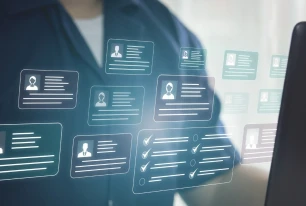
- Improving hiring efficiency - Many time-consuming aspects of the recruiting process, from writing job descriptions and sourcing candidates to initial screening and interview scheduling can now be automated with AI tool.
- Elevating candidate experience – Tailored communications can be delivered quickly to candidates, keeping them engaged and better updated throughout the process, from role recommendations and giving instant answer to questions about role, location or benefits through to automating offer letters and contracts.
- Faster growth and development - With an abundance of talent data that is often scattered across systems, the right AI tools can consolidate, analyze, and surface candidate and employee insights to drive smarter skills development.
- Better workforce planning - As career paths are increasingly non-linear, AI can showcase an employee’s strength to the wider organization. That visibility helps employees move into roles that better match their skills and potential, aiding internal mobility and succession planning.
These benefits all come with a caveat, AI technologies can also introduce a complex set of ethical, psychological, and organizational risks.
The dangers of automation without oversight
- Bias: Machine learning models are only as good as the data they’re trained on. If historical data reflects bias, such as underrepresentation of women or minority groups, those algorithmic biases may be replicated or even amplified. The case of Amazon’s AI recruiting tool, which penalized CVs containing the word “women’s”, is a reminder of how easily this can occur.
- Erosion of human judgment: While AI can augment decision-making, there is a risk of over-dependence. If hiring or promotion decisions become automated black boxes, organizations may lose the nuanced, empathetic judgment that human managers bring – which is why trust, transparency, and explainability matter so much when choosing AI talent vendors.
- Disengagement and privacy concerns: Overuse of AI can also contribute to employee disengagement if individuals perceive decisions as impersonal or unfair. The vast datasets needed for AI models raise legitimate questions about employee consent, data security, and surveillance. Without robust governance, AI-enabled tools may inadvertently undermine trust, especially if employees are unaware of how their data is being used.
- Legal risk: With new regulations, such as the EU AI Act, making many of these concerns compulsory, HR must take responsibility for understanding how and where AI is being used in talent processes and own compliance obligations.
Developing skills and awareness of HR teams is critical
These risks don’t mean organizations should retreat from using AI in HR, but to approach it with rigor and responsibility. As architects in building a human-AI advantage, HR professionals need to be not only equipped with the right AI tools, but also with training in how to use them, interpret the outcomes and integrate them responsibly into existing processes.
At its best, AI is not a replacement for the human touch – it is a partner to it. When grounded in objective data and paired with ethical frameworks and transparent governance, it serves both the business and the individual in equal measure, making talent practices more inclusive, transparent, and future-focused.
At SHL, we combine 45+ years of proven behavioral science, validated assessment data, predictive analytics, and transparent AI to give you a complete, objective view of people’s skills, potential and performance.
Learn more about how you can get faster, fairer defensible hiring decisions.
Authors