Blog
The AI Talent Gap
Organizations have poured money into AI tools, providing employees with access, but transformation still stalls. This makes the issue less about tools, and more about creating trust among the workforce and determining who is ready to use AI effectively.
Share
Share
Overcoming fragile trust in AI
Dr. Sara Gutierrez, Chief Science Officer at SHL, spoke with Kathi Enderes, SVP of Research at The Josh Bersin Company, on the recent "What Works" podcast. The focus of the discussion was how AI has disrupted traditional talent process and its impact on the workforce, and in particular the importance of measuring AI readiness.
From a recent AI at work survey, seven in ten employees aren't confident their own employer knows what it's doing with AI. That is not pointing to a lack of investment or tool availability but a lack of communication, strategy and development to build trust. Trust, Sara and Kathi agreed, runs in both directions. Organizations want employees to trust that AI initiatives are fair and well-intentioned, but employees also need to feel trusted to use these tools responsibly, and need transparency about what it means for their roles and the future.
Who is actually AI-ready?
As Sara says in the podcast, everybody has AI, but not everybody is AI ready. SHL’s research shows graduates and early-career employees are strong with the tools themselves, but are often weaker on applying AI responsibly, interpreting its outputs critically, and staying within guardrails. Experienced professionals tend to show the opposite pattern — strong contextual judgment and responsible use, but less inclined to reimagine how a process could work differently with AI in the mix. Neither group is fully AI-ready, and that is typical across most organizations.
The value of AI is only realized when people have the capabilities and skills to use it effectively. That’s why CHROs and other HR professionals are asking practical questions like, what skills do we have today, where are the gaps, and how can we quickly get to a point where we can effectively redeploy that talent? As Sara says, “When we're thinking about how we can help organizations identify the right talent to really work in these AI-enabled environments, it is about measuring those durable, transferable human skills—things like adaptability, critical thinking, learning orientation—things that I could take from my role today into a role that I go into tomorrow.”
With SHL’s AI Readiness model, organizations can measure four overarching factors with eight skills that sit underneath. These objectively measure if a candidate or employee is ready to work effectively and drive value from AI. On an individual level, it can help hire those that are more future-ready or personalize development to fill AI skills gaps. On an organizational level, it can provide real insight into readiness across roles, teams, and functions and highlight capability gaps.
Framing assessment as growth, not judgment
If trust is already fragile, introducing any kind of AI readiness assessment can easily backfire unless it's framed correctly. As Sara says, "You can frame this assessment or the evaluation of these critical skills not as judgment but instead a tool for growth." That distinction changes everything about how people respond. An assessment framed as a performance filter makes employees defensive, but an assessment framed as the starting point for a development plan that guides reskilling, mobility and even leadership development, makes them interested. This transparency, when applied consistently, is what will eventually earn the trust that so many organizations are currently missing.
The same goes for measuring the behaviors of AI leaders. Workforce adoption without leadership will slowly dissipate any enthusiasm, restrict workflows evolving and stifle scalability of any successes.
The thread running through the entire conversation was that AI transformation is less about tech and more about people. With pressure to invest in and adopt AI, businesses need to ensure that people are brought along the transformation journey, with a clear transparent strategy showing how they can learn, adapt and develop alongside ever-changing tech.
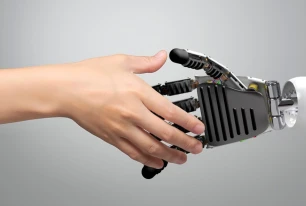
Those that set themselves apart from the competition aren’t those with the deepest pockets, the most AI tools, or the latest innovations, it will be those that get the right human+AI collaboration that can drive real talent and business growth.
Want the full conversation? Listen below to see how a media and telecoms company used AI readiness data to de-risk a major transformation, and what's coming next in AI leadership assessment.
Ready for the EU AI Act? We're here to help.
Join our LinkedIn live event on September 9 to learn what you need to know before 2027.
Author